
What it does: Coordinate and request civic help in Pereira and Dosquebradas: food, tools, medicine, volunteering, family networks and collection points.
How it works: People publish needs and offers; others respond in real time.
The network
Many mature apps already help after the emergency. Each solves a piece in its own way. This page lists them together — and features Corag Ayuda Directa as one node in the same network.
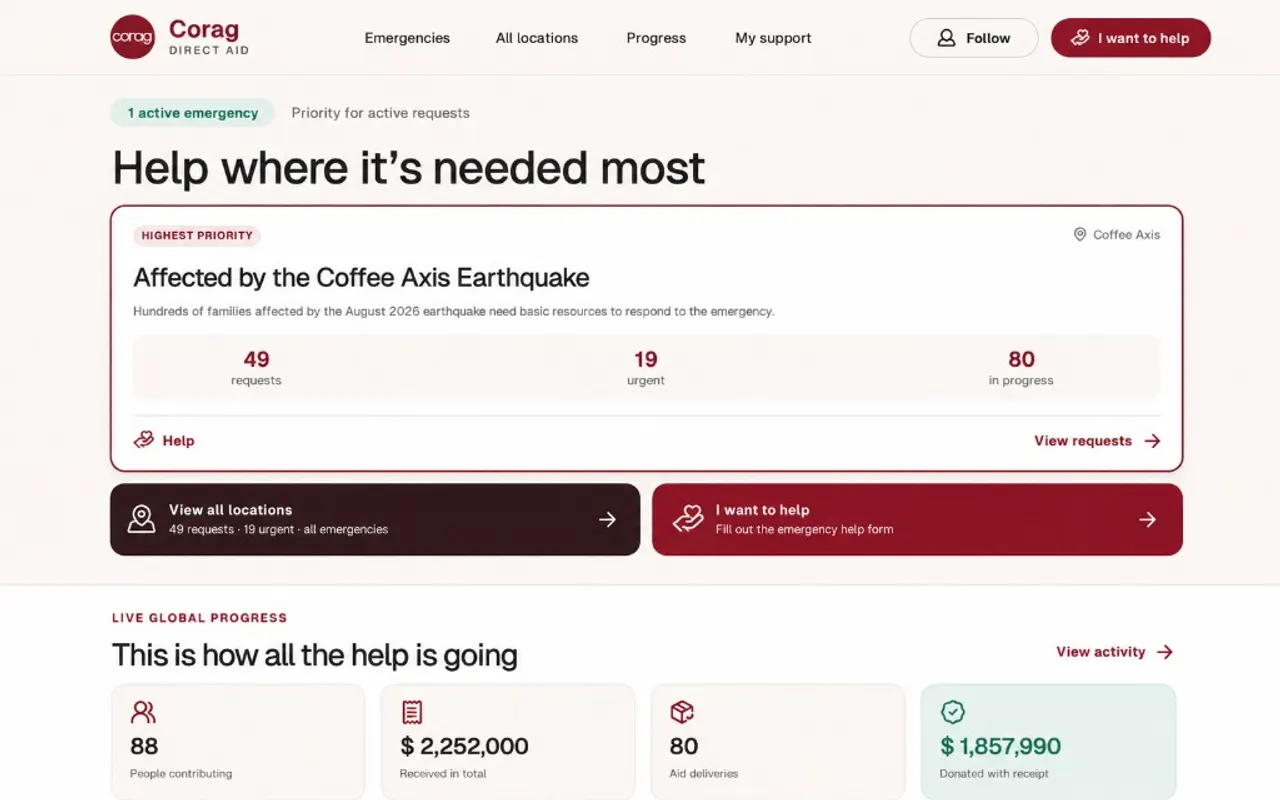
Our node

Aid with evidence
The application where a need is published, help is offered, contributions happen, and the evidence of every delivery is reviewed.
A live map of requests and people ready to help. Corag is one node in this network: it does not replace the other apps — it feeds with them.
Complementary tools
Descriptions come from what each public site says about itself. Listing is not a ranking and not an endorsement.
Connect people who need help with people who can give it.
What it does: Coordinate and request civic help in Pereira and Dosquebradas: food, tools, medicine, volunteering, family networks and collection points.
How it works: People publish needs and offers; others respond in real time.

What it does: A board to publish and fulfill help requests after the earthquake.
How it works: Post a request or pick up one that is already open on the shared board.
What it does: A volunteer directory that connects people who want to give with families fundraising on their own. The primary campaign is the Venezuela earthquake (2026); there is also a form for Colombia earthquake cases. The site does not collect or manage donations.
How it works: You pick a family campaign and donate through the channels that family publishes.
Map infrastructure damage, cracks, and field reports.
What it does: A citizen map of infrastructure in Pereira: buildings, roads and support centers. Each report can include up to three photos.
How it works: Mark the place, choose the damage type, attach photos and publish. Nearby collection and shelter shortcuts, data download, and a documented public API.

What it does: Citizen reports of structural damage (cracks) after a quake. Offers preliminary guidance; it does not replace a professional inspection.
How it works: Upload crack photos, review local reports, and use the professional channel when relevant.

What it does: An open damage map for Colombia’s 10 August 2026 quake: damage points, shelters and collection sites across several cities.
How it works: Explore the map and add damage or aid-logistics points.

What it does: An open, privacy-minded platform to map damage, people trapped, injuries, shelters and service outages.
How it works: Report and consult incidents on the shared map.

What it does: A citizen platform for reports, an impact map and access to official emergency sources.
How it works: Choose what you need — report, view the map or check official sources.

What it does: Report and consult buildings, collection centers and logistics in real time.
How it works: Use the live map to publish or read the situation on the ground.
Collection centers, shelters, hospitals and supply coordination.

What it does: Centralizes post-quake aid information: collection centers by municipality (what is needed and what is covered), person-to-person help, and a map sortable by proximity. Available across Colombia.
How it works: Use your location or pick a municipality; review centers, needs and inventory; contact via WhatsApp when relevant. The site states it reunites data from sources such as Ayudas Pereira, Corag, Pereira Responde and Pereira Unida — it does not invent the information.

What it does: Collection-center coordination: pick your city to see what is missing and where there is surplus; volunteering and transport too.
How it works: Enter by city, review centers and urgencies, and join as a volunteer or transporter.

What it does: Shelters, collection centers, meals, help and pets after the quake, with last-updated times.
How it works: Browse emergency information organized by topic with timestamps.
What it does: A free community rental platform for Pereira and nearby municipalities after the quake: find housing, list a place, or report a “for rent” street sign with a photo — no account required.
How it works: Filter by type, municipality, neighborhood and price; report street signs; landlords publish or remove listings without signup. There is also a channel to report emergency price gouging. The site asks you to verify the property in person and never send money in advance.

What it does: Where to shelter, where to donate and which hospitals are open in Pereira and Dosquebradas. Every datum carries its date.
How it works: Browse the dated directory of shelters, collection points and hospitals.

What it does: A map of collection points, shelters, volunteering and institutions; a missing-persons registry; donation channels and official guides.
How it works: Explore the site’s aid infrastructure and public registries.

What it does: A Pereira help map published by Gogó.
How it works: Browse help points on the Pereira map.
Help reunite lost animals with their families.

What it does: Classifieds to reunite lost pets with their families.
How it works: Post or browse “missing” listings with photos and pet details.
Missing persons and reunification tools for responders and families.

What it does: For rescuers and response teams: upload a photo of someone with you; it is matched against missing-person reports and then deleted. Families can also report a missing person.
How it works: Use “I have them with me” or “Report missing” depending on your field role.

What it does: Pereira’s municipal citizen portal: missing persons, building reports, a census of affected businesses and public lists.
How it works: Report a person or a structure, or browse the portal’s public lists.
This directory describes complementary public tools from what each site says about itself. Listing is not an endorsement of any organization. To request removal or inclusion, use the form below or write to us.
Grow the network
Tell us what you built. A human reviews every request — this is not automatic listing.