The model
How it works
Corag holds nobody’s money. It connects the person who needs with the person who can, puts a named responsable in between, and publishes the account afterwards. Here is the path, step by step.
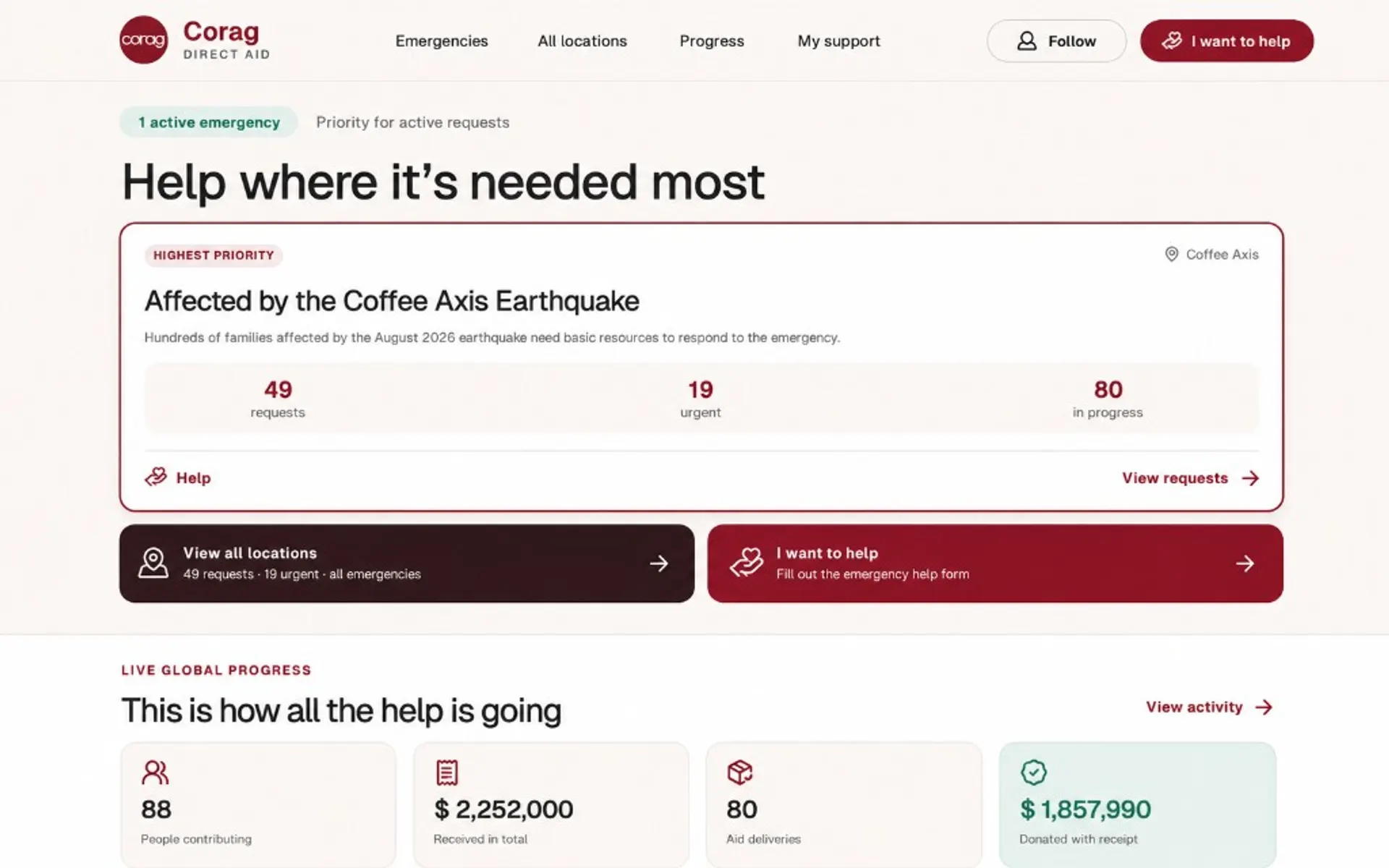
The path of one delivery
Five steps. None of them happens on this site: they all happen in the application.
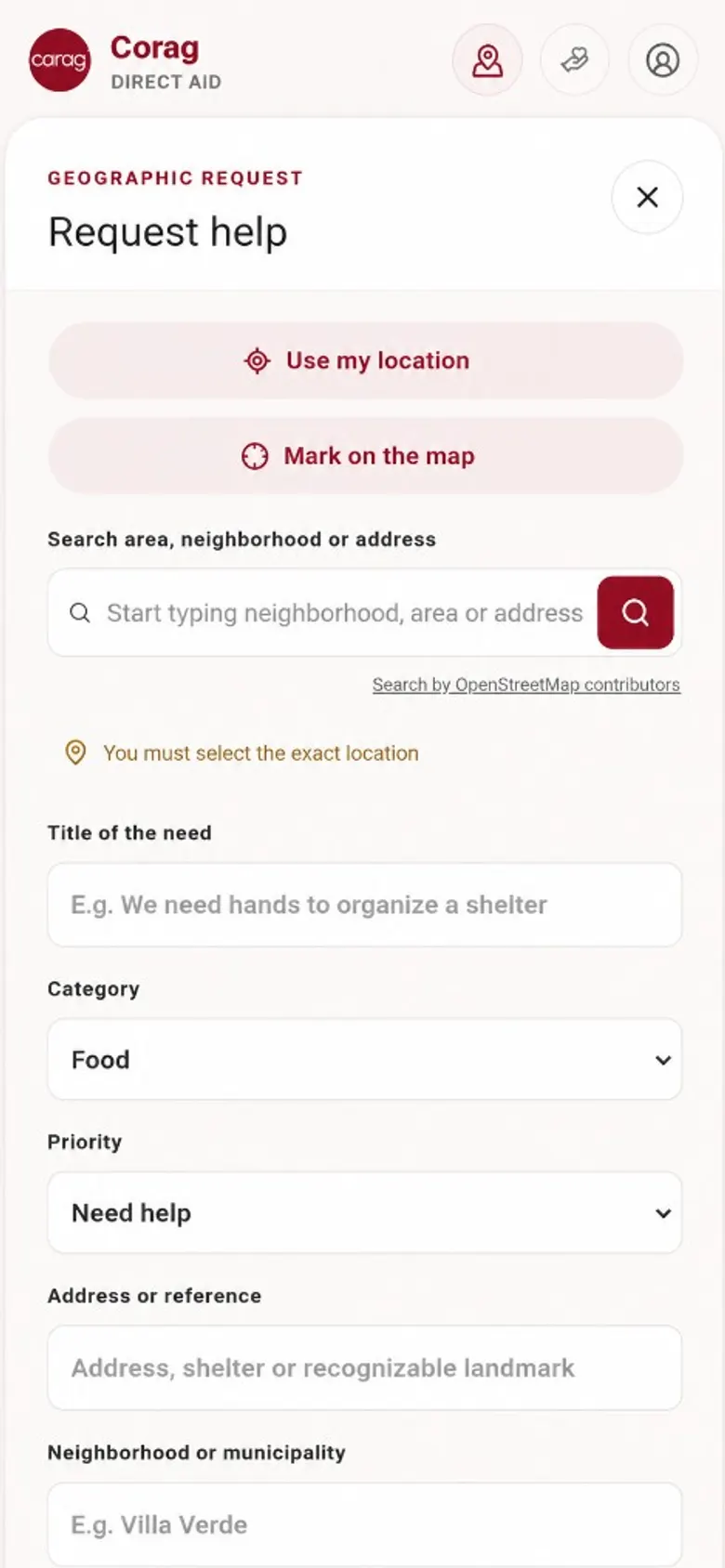
Someone publishes a need
A family, a community leader or an organization records what is missing and where. The request becomes visible to the network instead of being buried in a chat thread.
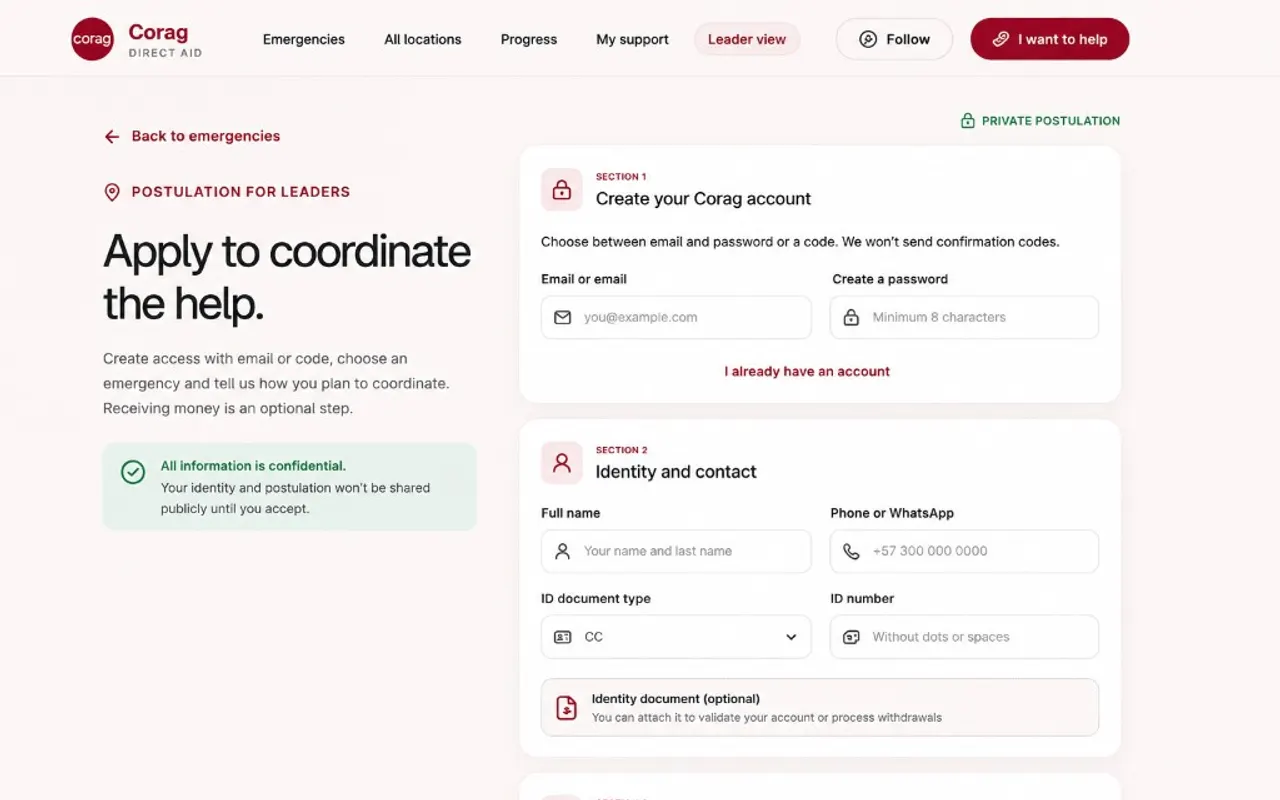
A responsable takes it on
Whoever coordinates in that territory owns the delivery. They have a name, a validated identity, and a verified connection to the area or the organization.
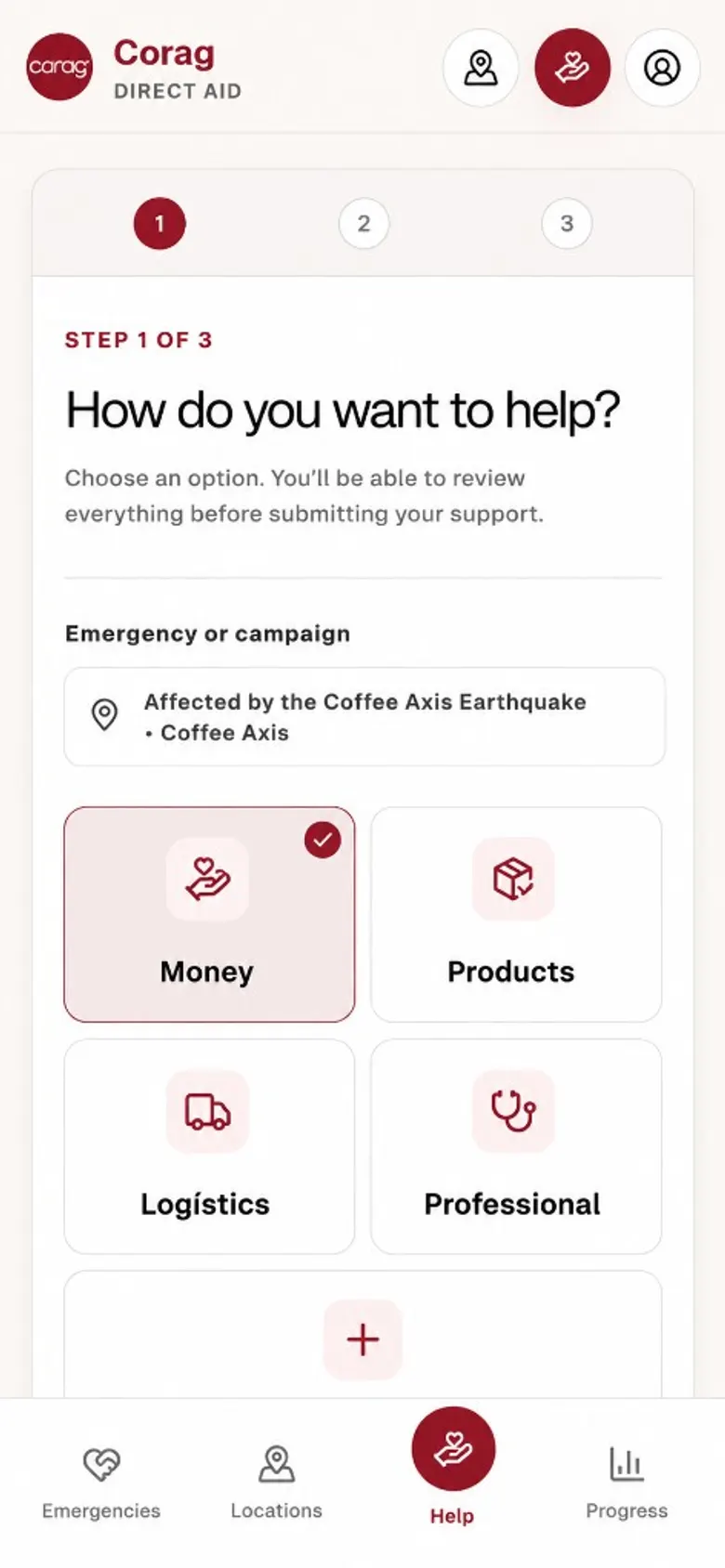
Someone contributes
The contribution goes by direct transfer to the responsable’s verified account. Corag is not an intermediary for the money and takes no cut for moving it.
The delivery happens
The responsable buys, transports and delivers. They record what was delivered, to how many people, and when.
The evidence gets published
Photos, receipts and figures are uploaded within the window, go through administrative review, and only then get published. Until that moment the contribution counts as received, not as used.
Why the money does not pass through us
A platform that collects and then distributes becomes both the bottleneck and the single point of failure. If it goes down, freezes or gets something wrong, the aid stops with it.
Direct transfer removes that risk, but it moves the trust somewhere else: onto the responsable. That is why validating responsables is the critical dependency for everything else, and why evidence is not optional.
The three roles
Person
Publishes a need, offers help, or contributes. Nobody’s permission is required to start.
Responsable
Coordinates and executes. Receives contributions in their own name and answers for them with evidence, within the window.
Administration
Validates identities, moderates evidence before it is published, and reviews reports about the use of resources.
What happens when something goes wrong
Failing to provide evidence is the most serious lapse, because it breaks exactly what makes Corag verifiable. The response is staged: a reminder, then suspension of the ability to receive contributions, then removal from the role.
All of this happens in the application
Publishing a need, offering help, contributing and checking the evidence are Ayuda Directa actions. This site only explains them.